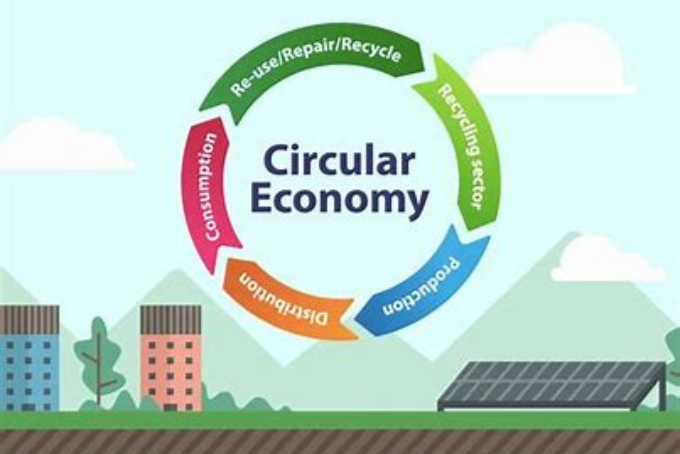
Where are we in the circular economy?
A circular economy is a model of production and consumption, which involves sharing, leasing, reusing, repairing, refurbishing and recycling existing materials and products for as long as possible.
How is it set up?
A circular economy is a framework of three principles, driven by design: eliminate waste and pollution, keeping products and materials in use and regenerate natural systems. It is based increasingly on renewable energy and materials, and it is accelerated by digital innovation. It gives us the power to grow prosperity, jobs, and resilience while cutting greenhouse gas emissions, waste, and pollution.
The circular economy is an economic model that aims to maximize the use of resources and minimize waste by keeping materials and products in use for as long as possible. It is based on the principles of the “reduce, reuse, and recycle” hierarchy, and seeks to create a closed-loop system where waste is reduced, products are reused or repurposed, and materials are recycled or regenerated.
In the circular economy, products and materials are designed to be durable, repairable, and recyclable, and are kept in use for as long as possible through strategies such as sharing, renting, and leasing. When products reach the end of their useful life, they are either repurposed or recycled into new products.
The circular economy is seen as a more sustainable alternative to the traditional linear economy, which is based on a “take-make-dispose” model and relies on the constant extraction of new resources to create products that are quickly discarded. By contrast, the circular economy aims to create a more regenerative and restorative system that reduces environmental impact, creates economic opportunities, and fosters social innovation.
How can recycling companies and individuals help contribute to the circular economy?
Recycling companies like us here at S4B Group and individuals can play a significant role in contributing to the circular economy by reducing waste and keeping resources in use. Here are a few ways in which we can help:
Reduce waste: Companies can reduce waste by implementing source reduction techniques that minimize the generation of waste in the first place. This could involve using more durable materials, designing products to be more easily repairable, or implementing waste reduction initiatives such as composting.
Increase recycling rates: As a Recycling company we are improve recycling rates by implementing effective recycling programs and investing in infrastructure that can process more materials. Individuals can also help by properly sorting their recyclables and reducing contamination, which can make the recycling process more efficient.
Promote reuse: As a whole, recycling companies promote reuse by refurbishing or repurposing products, rather than just recycling them. This could involve refurbishing electronics or repurposing textiles into new products. Individuals can also contribute by choosing to reuse products, such as by using refillable water bottles or reusable shopping bags.
Implement circular business models: Companies can adopt circular business models, such as product-as-a-service, where they retain ownership of the products and are responsible for their maintenance and repair. This can incentivize the company to design products that are more durable and repairable, and can help reduce waste.
Invest in innovation: Recycling companies can invest in research and development to find new ways to recycle or repurpose materials, or to develop new products made from recycled materials. Individuals can also support innovation by choosing to buy products made from recycled materials.
Overall, by adopting sustainable practices and promoting the reuse of resources, companies and individuals can help create a more circular economy that is more environmentally and economically sustainable.
So, how can you help with being greener?
- Buy recycled products such as clothes, paper etc
- Reuse water bottles and bags
- Buy products with less packaging, and buy more local produce so you can ensure your ‘food miles’ are lower.
- Clean, sort and separate your home waste such as cans, cardboard, packaging etc
- Use less paper – implement document solutions software on your printers to print less, and prevent wasted paper.
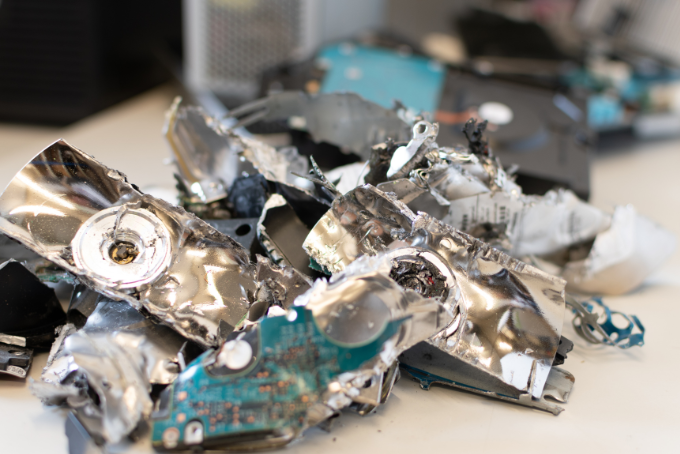
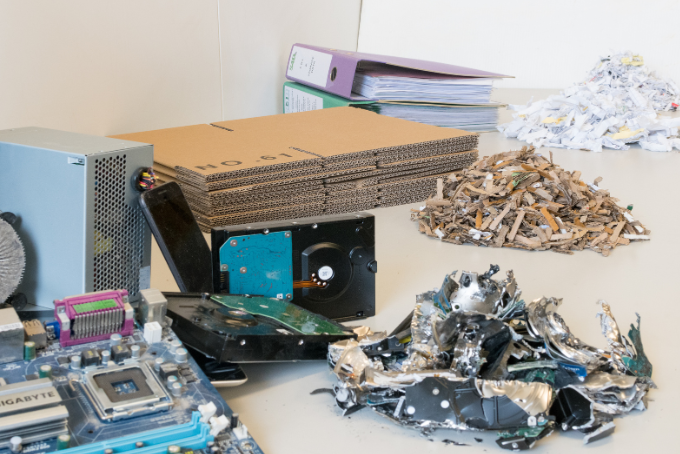
- Use your current IT, such as laptops and PC’s for longer before renewing, and when it is at end-of-life send it to a recycler, such as S4B where we can shred your hard drives and downstream recycle the rest of the parts for reuse as other products.
Want to know more about the storage, shredding, document & IT destruction and recycling services we offer at S4B Group? Call our friendly team on 01342 326806 today.